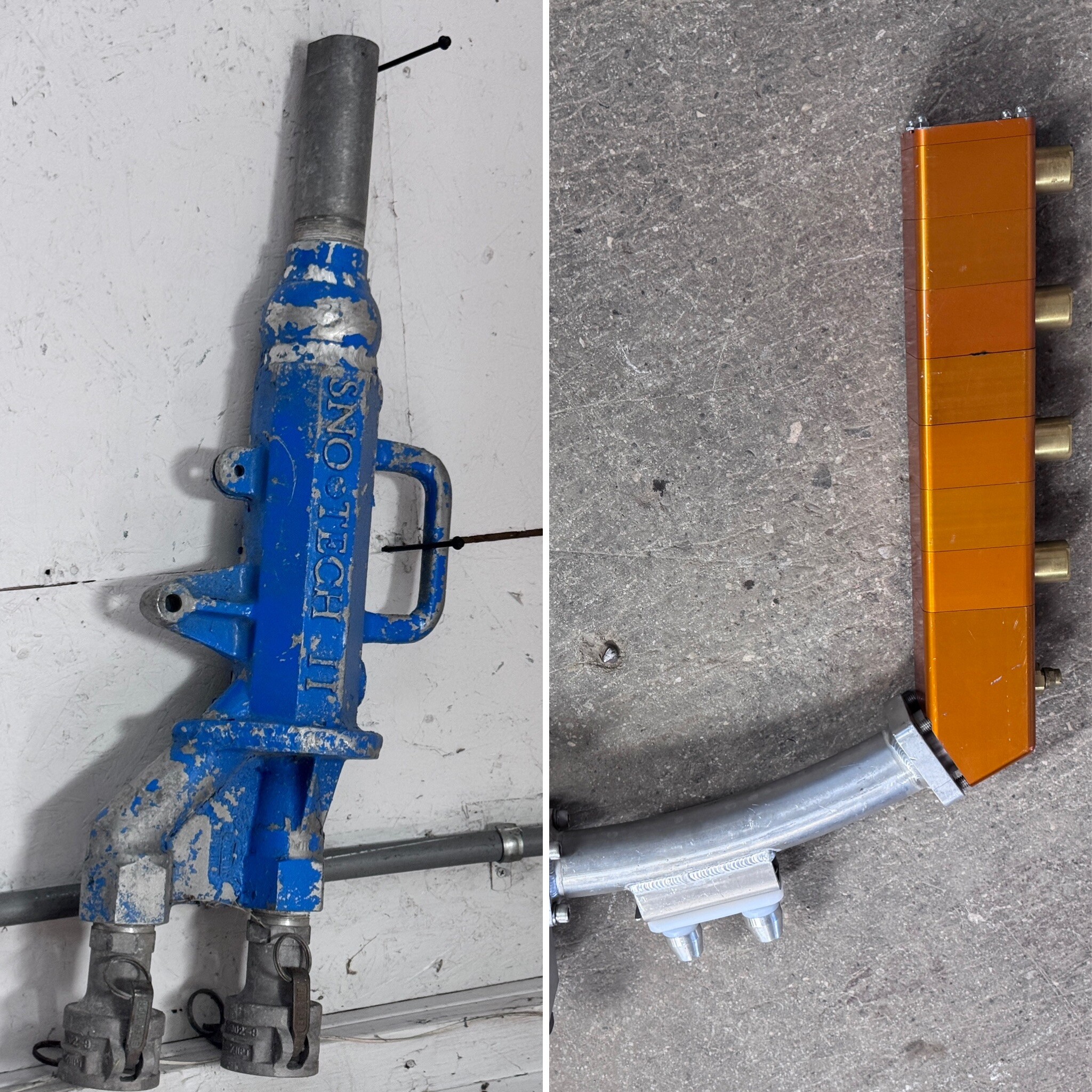
Okemo can cover 98% of its skiable terrain with snow and puts 300M gallons of (frozen) water on its slopes each season. For years Okemo has made happy memories with its miles of pristine corduroy.
Most of us thought this was because of a skilled team with cutting-edge equipment, and we were half right. In reality, it’s an exceptional team wielding a snowmaking system old enough to buy itself a beer—which it has earned.
It’s impressive to consistently churn out snow under those conditions—and knowing where Okemo is coming from makes this season’s snowmaking upgrade even more exciting.
Nothing says skiing like a submarine movie.
There’s a scene in McHale’s Navy; the engine room’s seasoned mechanic has a pair of new recruits watch as the sub’s hull gets “squeezed like an empty beer can” on their first dive. They’re terrified; he’s unphased—and with a shrug—goes back to cranking that old engine for all it's got.
That’s kind of the vibe from the Okemo snowmaking team—experienced, steadfast, and able to coax every bit of potential out of their equipment. And they’re pretty funny.
Earlier this summer Ski Vermont and a team of journalists toured Okemo’s snowmaking updates with Sr. Manager of Snow Surfaces Greg Cartier and Snowmaking Manager Charlie Hibbard to learn what skiers and riders can expect this season.
“Snow guns make snow” is probably what most of us know about the process, and that’s ok. Fortunately, our tour followed the path of an Okemo snowflake—from river to trail—to show how much art, science, and passion snowmaking actually takes.
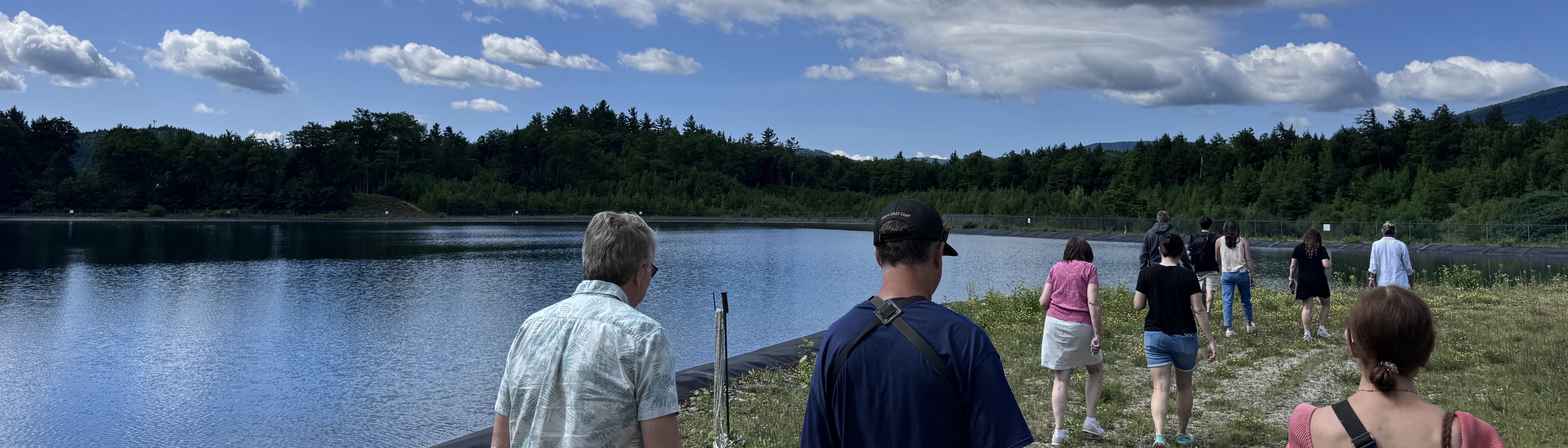
Okemo has three water sources: the upper reservoir, West Hill pond, and the Black River. Together they provide the 300M gallons for Okemo’s slopes each year.
Interesting fact: the upper reservoir is filled in March for the coming season. Snowmaking is a largely non-consumptive resource, meaning nearly all water from snowmaking ponds or steams ultimately returns to the watershed during the spring thaw.
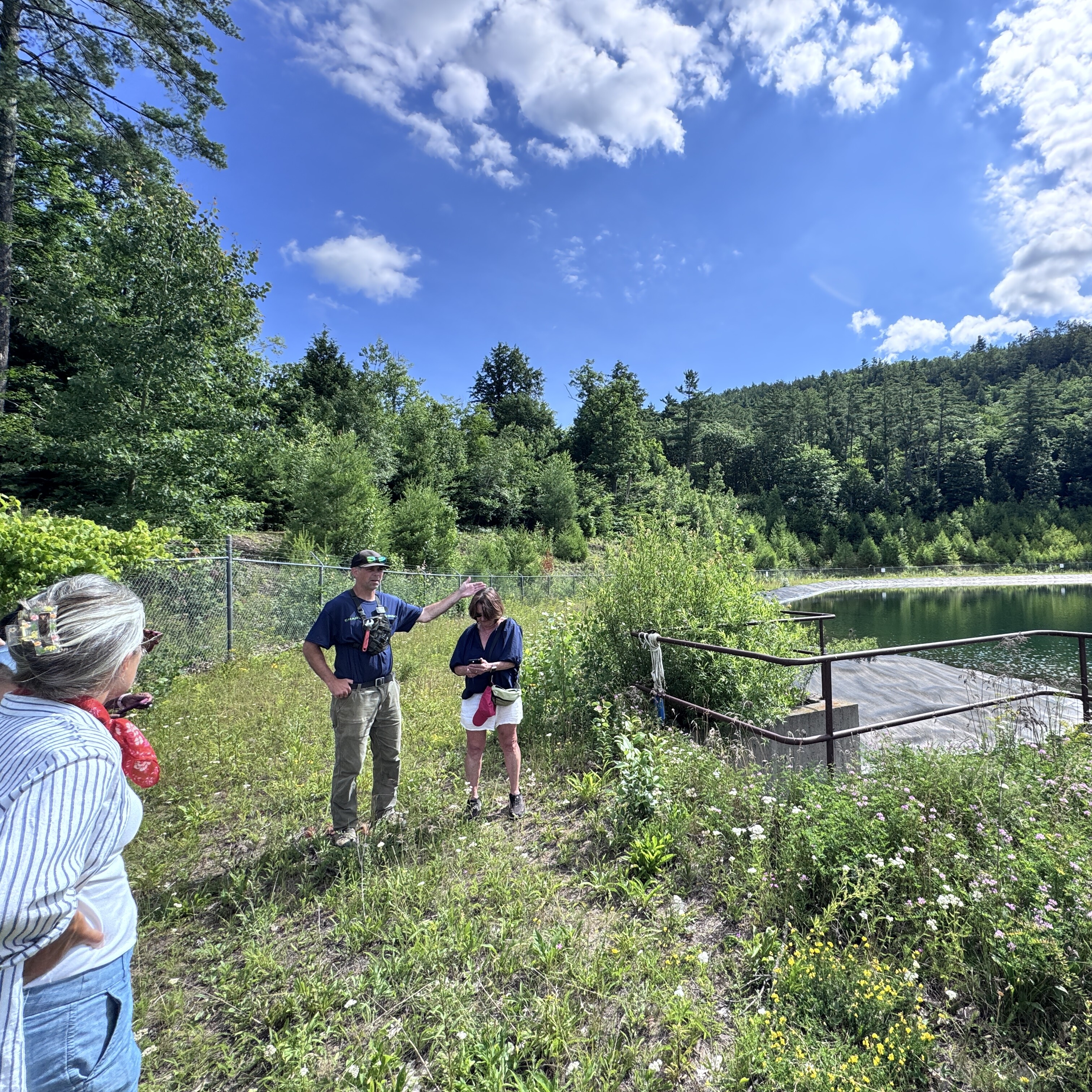
The upper reservoir is 62' at its deepest point.
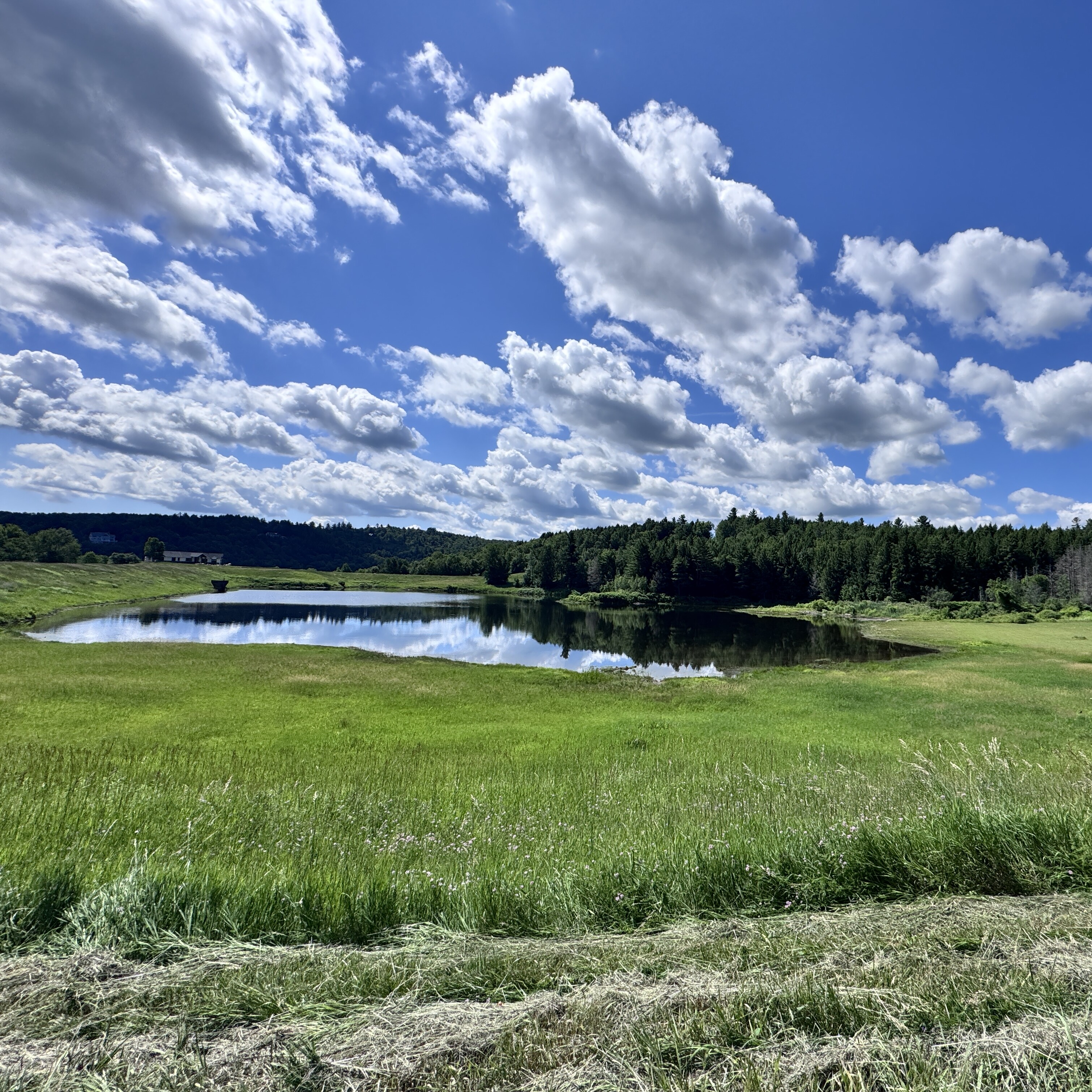
West Hill Pond.
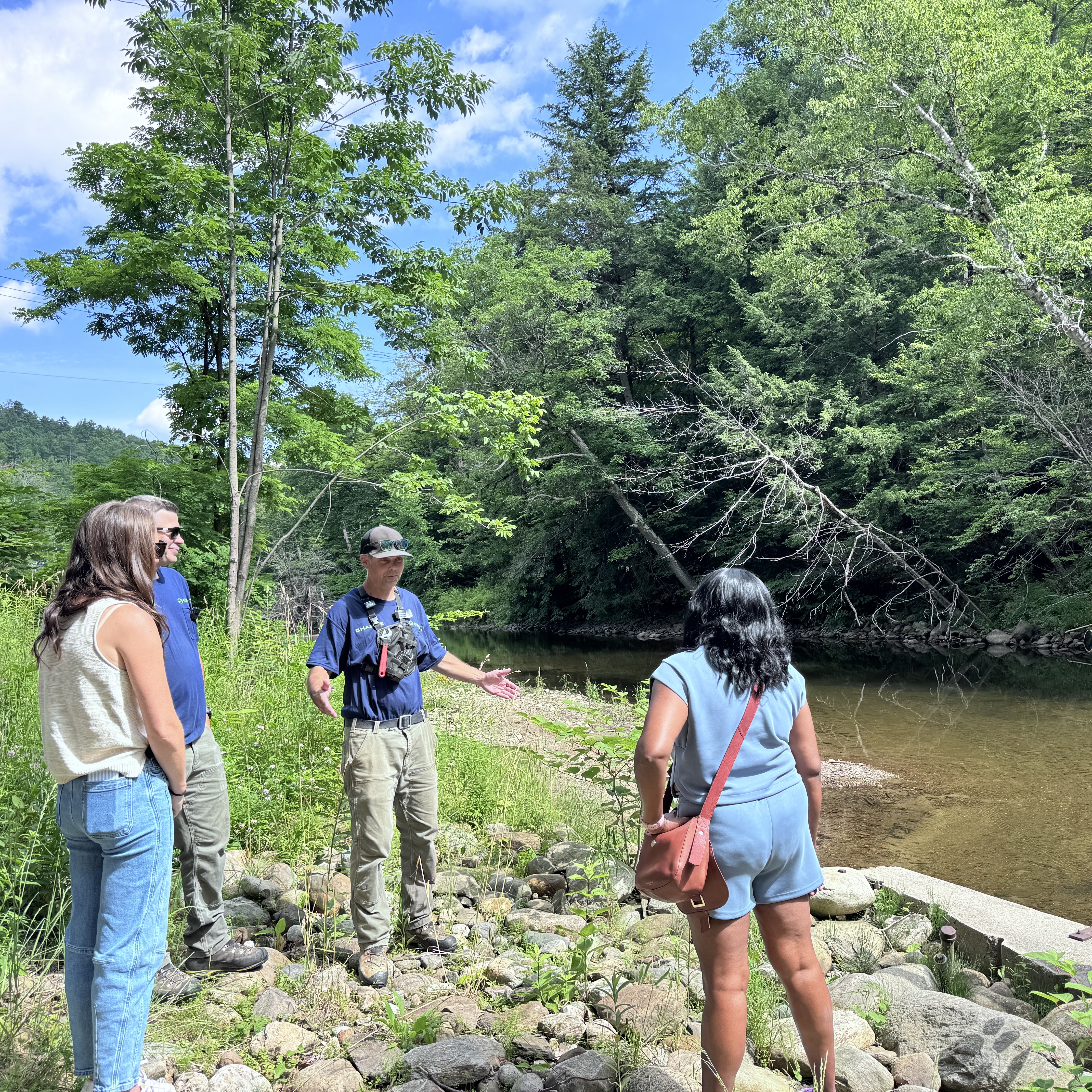
The Black River provides water to the upper reservoir or directly to Okemo's snowmaking systems when flowing at approved levels.
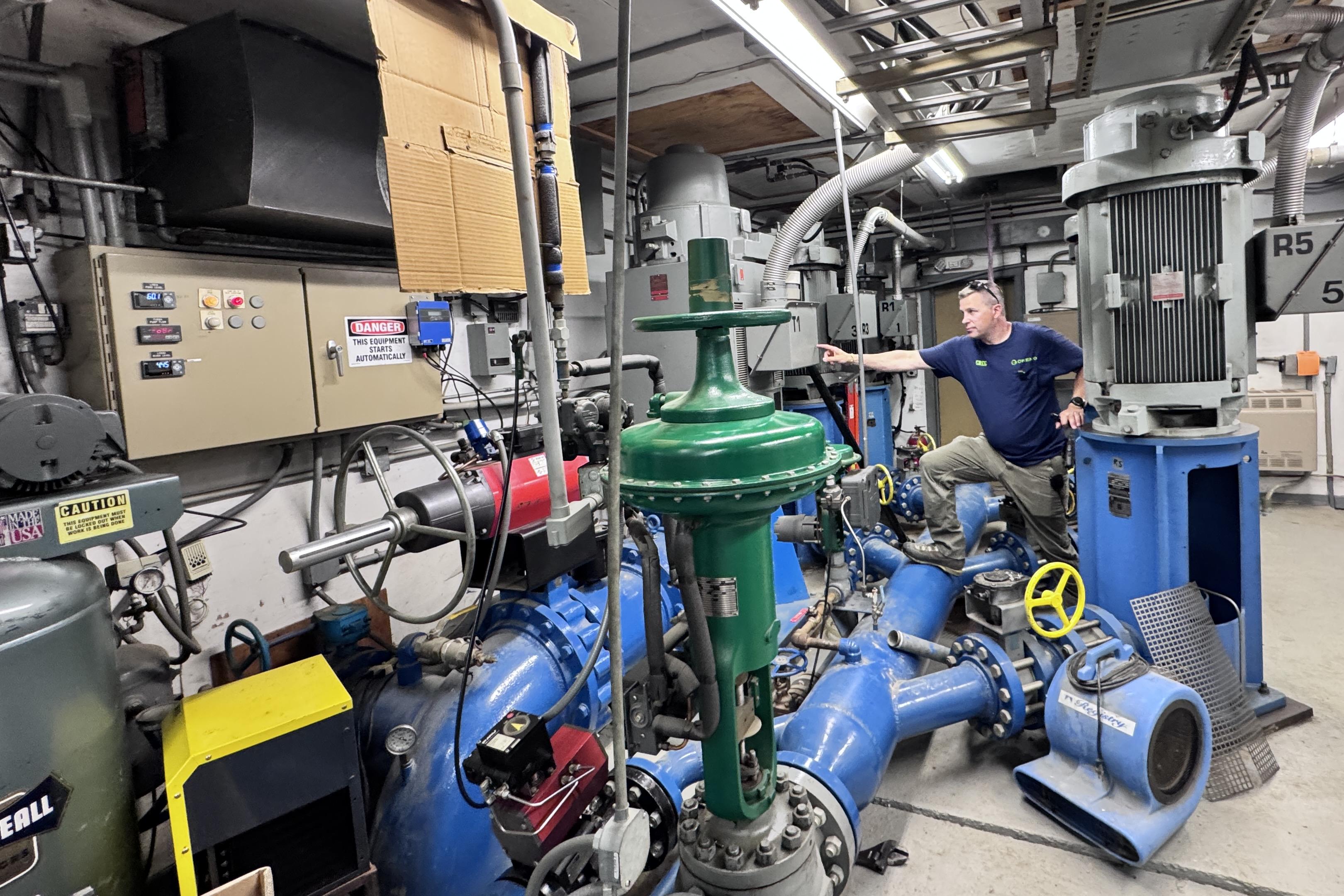
Most water travels through the river pump house, either to the upper reservoir or directly into the snowmaking system. Okemo’s upgrades start here, with an upgrade to five new Variable Frequency Drive (VFD) pumps.
VFDs only run at the speed they need to. The old pumps ran at 100% whenever they were on—with snowmakers on radios manually opening and closing valves to change pressure. With this update, Okemo decreases energy consumption and staff time spent making those adjustments. “Eventually, we’ll be able to control most of this room from our phones,” says Greg.
From the base pump house the water flows to 25-year Okemo veteran Steve Wilson, who distributes it across the mountain with over 90 miles of pipe. In the simplest terms, snow guns send water droplets into the air to freeze. They do this by combining water (from a hydrant) and air (most often from a second hydrant) at high pressure. Okemo has 2,104 water hydrants in its system, which means over 4,000 hydrants total. When we interrupted Steve, he was mapping hydrant locations to onboard into HKDs iSnow system, another upgrade.
Gone are the days of estimating water usage from flow rates and pressure readings. The new HKD system tracks pressures, output, and temperatures by gun, letting snowmakers know exactly how much snow they’ve put on a trail in real time—so they can focus on where it’s needed most. For skiers and riders that means opening more terrain, sooner, and faster than before.
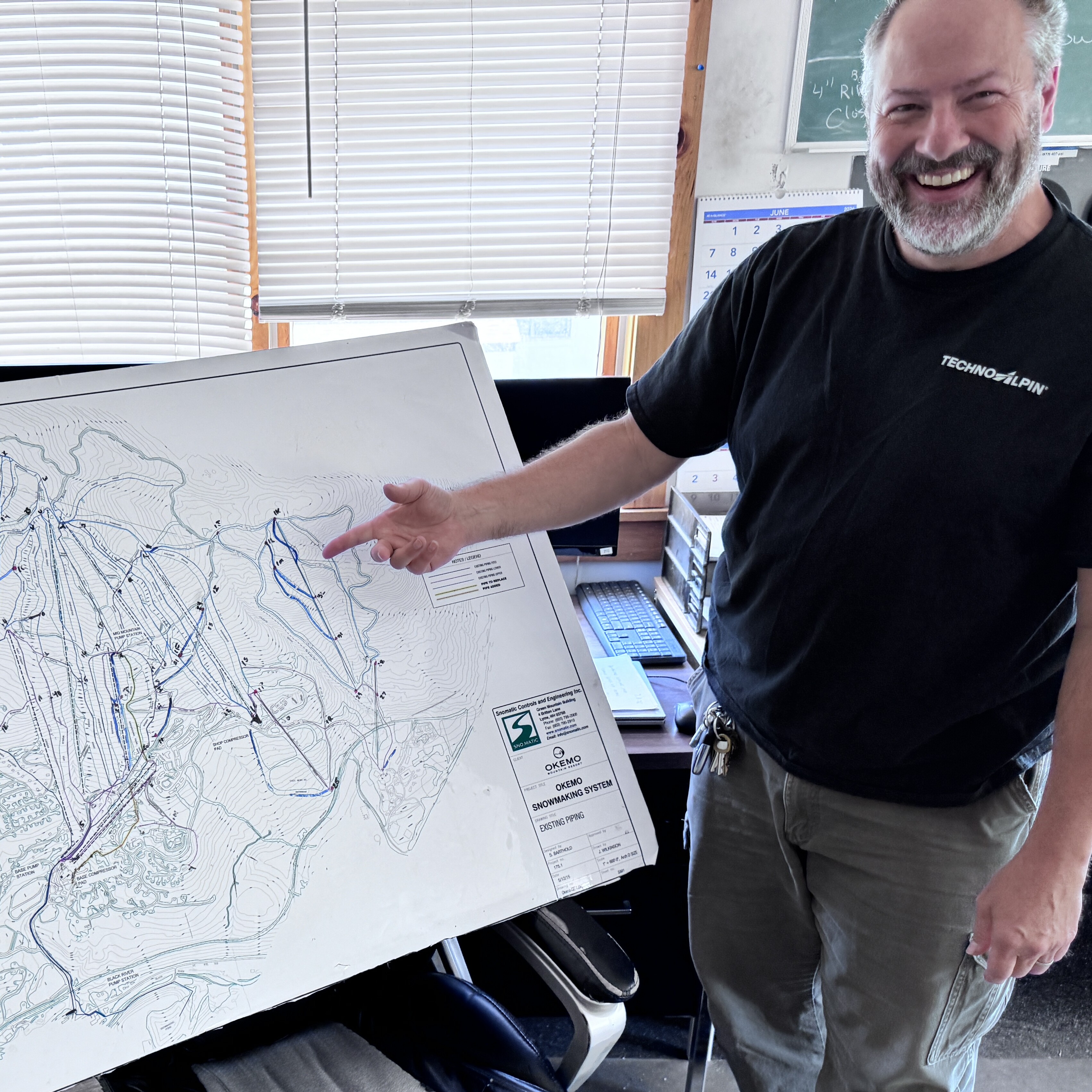
Okemo's Steve Wilson displays a mountain snowmaking map.
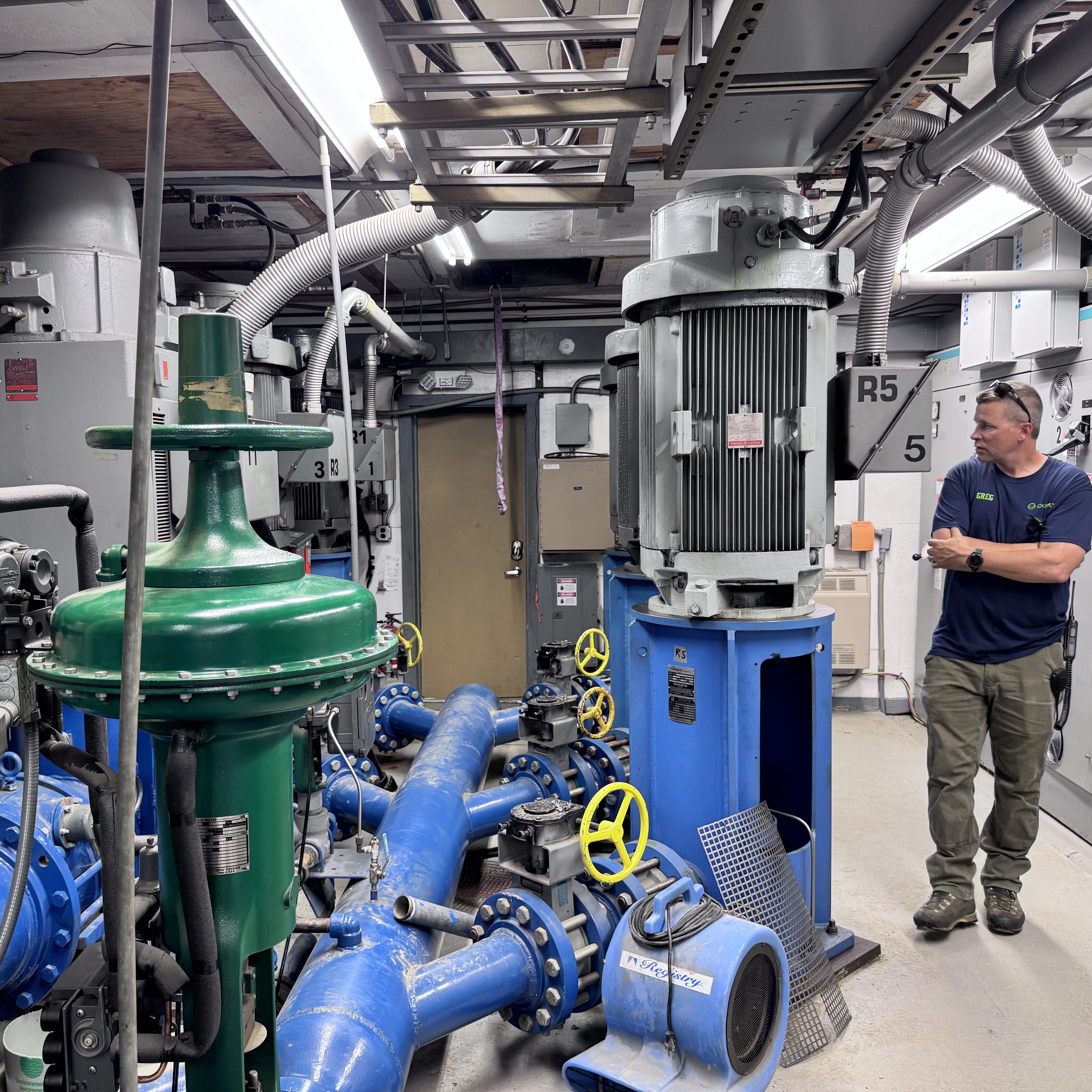
Greg Cartier in the river pumphouse.
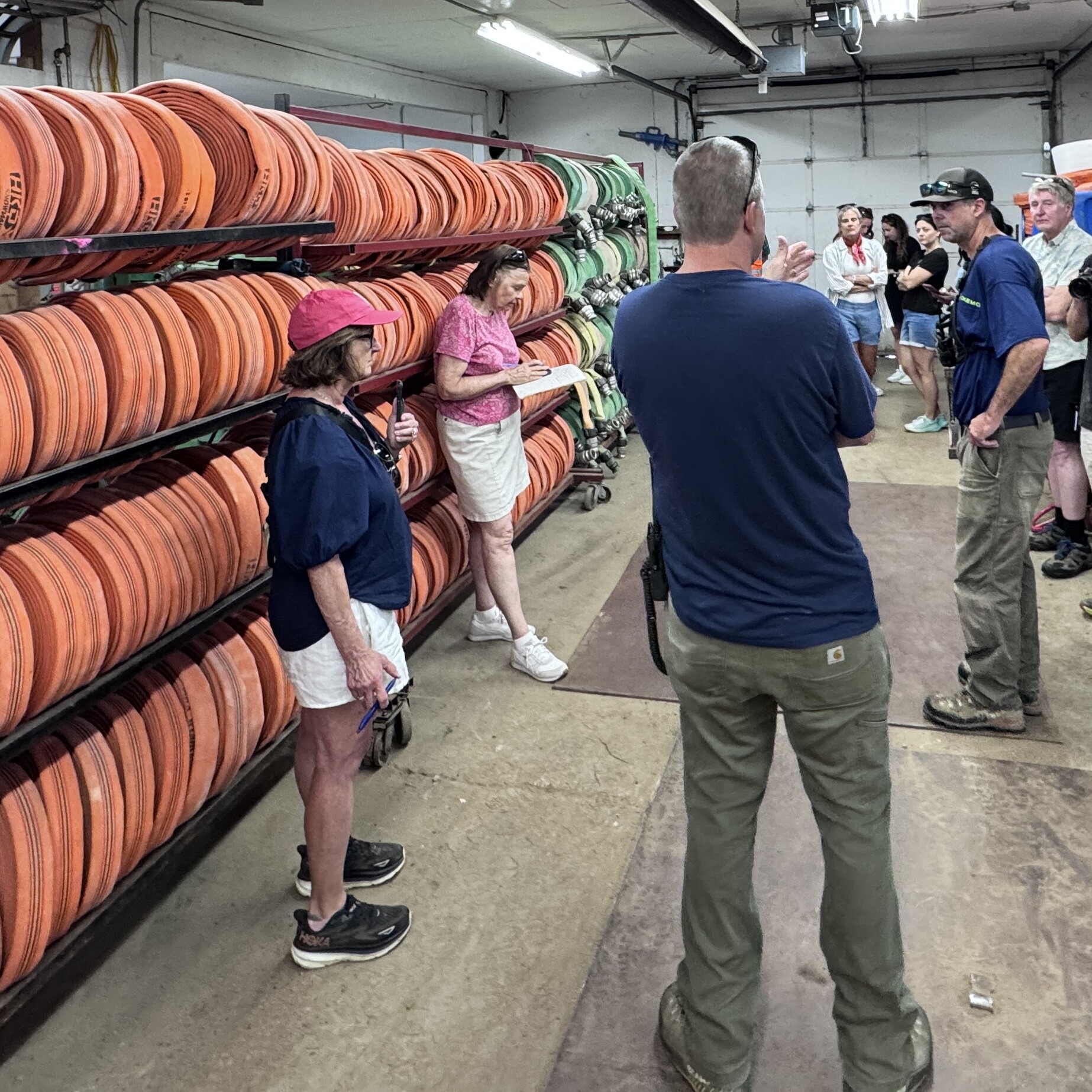
Touring the mid-mountain boost station and its arsenal of hoses.
Okemo’s pipes carry water at 800-900 (pounds per square inch) and air at about 95psi (for reference, your garden spigot comes out at about 50). To maintain that pressure Okemo uses a mid-mountain boost station. This is also where they store hundreds of snowmaking hoses during the summer, neatly coiled and ready for winter—and it’s clear they take care of their equipment. “These orange hoses are the newer ones, but we use all of them,” said Greg gesturing to the long row of shelves. “Some of the green and multi-colored hoses are actually from the 1990s.”
The site for the new 8,000 (cubic feet per minute) electric compressors sits farther up the mountain. In the past Okemo rented 11-15 diesel generators that each output about 1,100. The two new electric compressors will produce a combined 16,000cfm and are nearly twice as efficient as diesel. Electrical compressor also comes out cooler, so it requires less chilling before it can be used to make snow. This upgrade alone is expected to save an estimated 250k gallons of diesel fuel per year.
The summit valve house is the final stop before water and air is sent down pipes to the snow guns that dot the mountain. A new manifold distributes water and air from a single, centralized point, allowing for easy changes and adjustments. From there, water and air run down to the guns to cover 98% of Okemo’s 43+ miles of skiable terrain.
There are many reasons to look forward to seeing these improvements in action. They’ll bring increased efficiency, operational nimbleness, and snowmaking resilience. They’ll mean Okemo should be able to deliver better than before, and even with the older equipment , “before” was still pretty great. “We’ve always done more with less,” says Charlie. “ This is our opportunity to do more with more.”
No two snowmaking systems are alike, and they vary widely across Vermont—but one constant is snowmakers. They bring passion, institutional knowledge, and decades of experience needed to wield the most powerful snowmaking systems in the world. Blending art and science on a dark mountain, they create the blank page we make memories on.
They’re just one of the many careers available in Vermont’s ski industry. Running a ski area is like running a small city on a mountain and it takes a range of skilled, talented professionals to do it—from marketers and electricians to hospitality managers and lift maintenance specialists.
Interested in a profession with the best view around? Check out our careers page.
Already an ski area employee? Check out the SOAR certificate and other up-skilling options (financial assistance available with most).
Running a ski area is like running a small city on a mountain and it takes a range of skilled, talented professionals to do it—from marketers and electricians to hospitality managers and lift maintenance specialists.
Interested in a profession with the best view around? Check out our careers page.
Already an ski area employee? Check out the SOAR certificate and other up-skilling options (financial assistance available with most).