
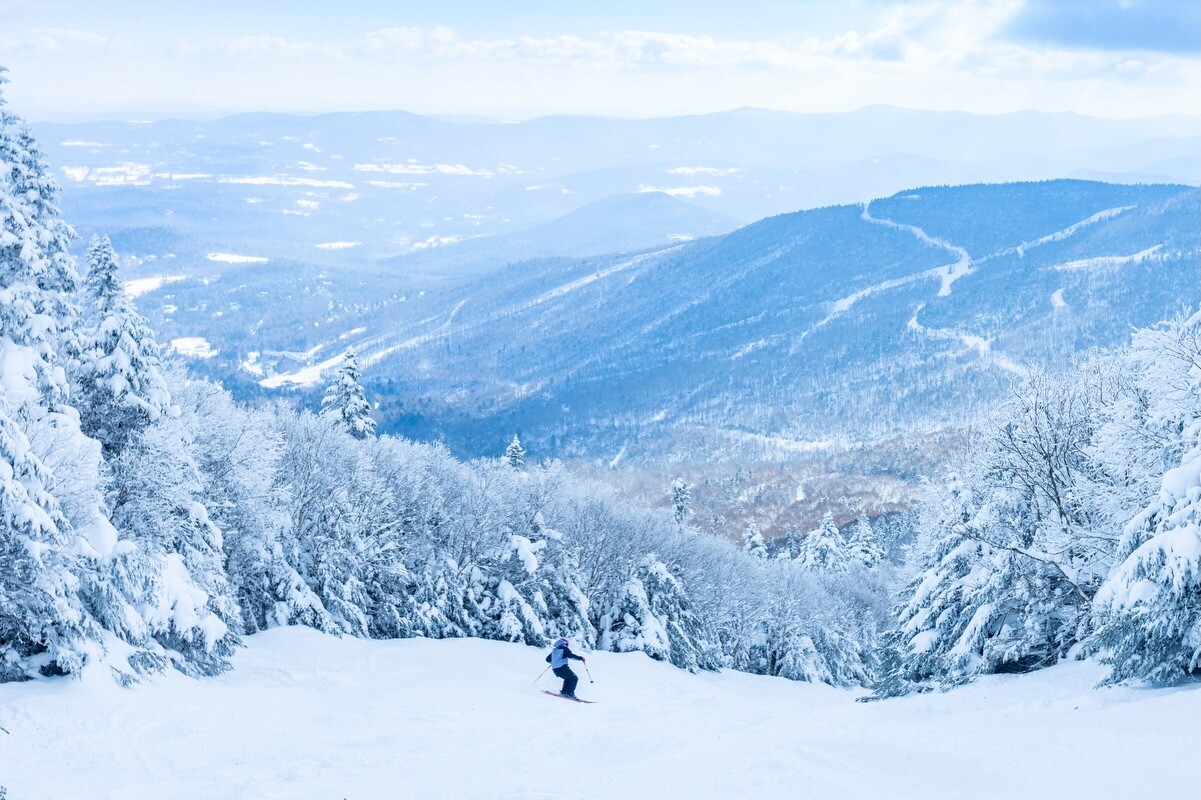
It's October, and for us ski industry folks, weather is top of mind. We've been getting a lot of questions about the weather outlook for the 2026/27 season. Snow? No snow? Snowmageddon? Just like you, we don't know. So, we decided to do some historical research in the Ski Vermont office to see what tricks our predecessors used to anticipate the winter. We were not disappointed.
Deep in a folder labeled "1980," we found a gem of a press release called "Old Time Weather Report," written by Jerome E. Kelley. This literary masterpiece, from a day long past, contains some tidbits of wisdom that we had never heard of before. We've heard about woolly bear caterpillar stripes being indicative of a mild or severe winter. But did you know that skunks and bears are also master weather predictors? Neither did we. There are a whole slew of Farmers' Almanac-style weather wisdom snippets that our friends from Ski Vermont's past gathered. Sit back, relax, and enjoy. We sure did.
by Jerome E. Kelley
KILLINGTON, VT -- Yup, we apologize. This annual piece of prognosticating prowess is a mite tardy. Most years we traipse through bogs and brambles collecting winter data from furtive flora and fauna in October. While our methods are arcane, our accuracy is unassailable. For the past five years we've batted better than .800, which is considerably better than the U.S. Weather Service. But, like we said, this year we're late.
Our reason? You won't believe it, but we've been skiing. Already? you ask.
Yup! Killington opened on October 14 while Sugarbush North got its inaugural schussing on October 25, and several other Vermont ski areas will unbatten their ticket windows shortly. Reluctantly, we've put our skis away -- temporarily -- and embarked on our annual autumnal chore of collecting the intelligence for our Sixth Annual Old-Time Weather Report. Here are our findings:

According to some old-time woodsmen, these pungent polecats are ideal weather forecasters. When a long winter is in the offing, they gorge themselves in the summer and fall so they can hibernate for a lengthy period. The fatter they get, the more odoriferous they become. Now, no one in their right mind is going to sniff a skunk when it can be avoided. So how does one figure the fragrance level of these fetid fellows? Simple! Smart skunk smellers use an intermediary for their olfactory work, such as the family dog. Recently, a neighbor's dog tangled with one of these noisome critters. The neighbor moved in with his mother-in-law for three weeks.
Knowing the mother-in-law, who is a rare combination of Vlad the Impaler and Lucretia Borgia, and who traces her ancestry in a direct line to Attila the Hun, we'd hazard a guess that skunks this year have reached a record for robust ripeness.

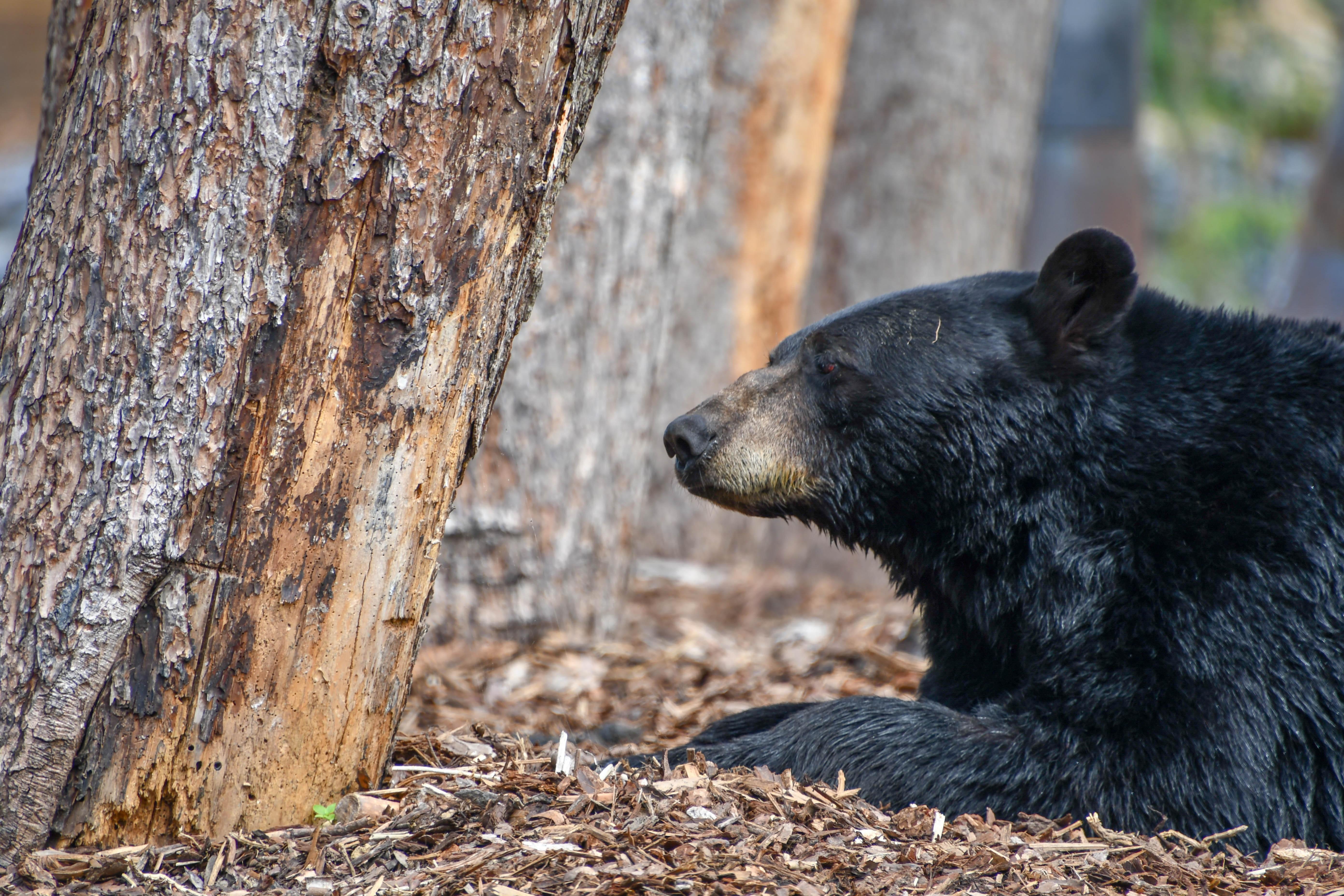
Last year we reported that Vermont bears were up to some strange things. It seems that they were eating corn. According to our longtime friend and expert on sylvan lore, Dieudonne LaFarge, this could only mean that we'd have the heaviest snow in years. Well, you know what happened; we didn't get enough of the white stuff to hold a sugar-on-snow party. This year we're pleased to report that Green Mountain bears have been eating their traditional fall fare of acorns, beechnuts, etc.
However, as a matter of courtesy, we recently got in touch with our bear man, Dieudonne, up in the shadow of Jay Peak, and asked if he'd noticed any weather portents of interest. "By gar," he responded enthusiastically, "tree, four days ago me, Pierre, Raoul, Euclid, Abelard, Apollinaire, Louis, Jacques, Jean, Baptiste and two or tree of my odder kids we go up to big wood to cut da logs. What we see you don't believe. We see rabbit, damn little rabbit, chasing big damn bear. What you make of it?"
What do we make of that? We'd say that the hard cider in the north country is a little harder than usual this year!

These toothy rodents get their jollies by gnawing down trees and by doing so have become almost synonymous with hard work. (Everyone has heard that old bromide, "Busy as a beaver.") Well, it's all hokum. Beavers aren't overly ambitious any more than people are. They work, not because they like it, but in order to eat. For their winter food supply they gnaw down small trees and pile them on top of their conical houses. During the winter they eat the bark. The height of a beaver's pad is indicative of how long winter will last. This year beaver houses are the highest in years. Matter of fact, one Vermont trapper caught a beaver with a double hernia and claims he got it from dragging all that timber to the top of his high-rise!

These brown and black caterpillars have been used to predict weather ever since Elder Brewster got his feet wet by slipping off Plymouth Rock. If their hair is thick, so too will be the snow on the ski slopes. If, on the other hand, their tonsorial adornment is sparse, the ski slopes will likely look like Yul Brynner's noggin. This year we've got a confession. We couldn't find a single specimen of these hirsute weather predictors. After some discreet inquiries (we had to be discreet in order to forestall those nice gentlemen in the white coats from the State Hospital from netting us!), a couple of front-rank experts informed us why the caterpillars had pulled a Judge Crater. Seems that bird migration to the sunny, salubrious south started early this year. As flocks of our feathered friends flapped toward their warmer winter habitat, they refueled on, you guessed it, woolibears. You may say, "This is for the birds." To this we'll add, "Thank gosh it is; we've always hated picking up those damn hirsute worms."

When a long winter is in the offing, field mice head for the warmer confines of a barn. However, anyone who tried to take a census of migrating mice will understand it has some problems: namely, mice are fleet of foot and hard to see. As a consequence, practiced professionals check out the barn cats who dine on these furry fellows. This year there are a lot of fat cats in Vermont who are so torpid they can hardly stagger to their feet. It's been reported that at least six potbellied pussies have been seen hanging around the local Weight Watchers headquarters.

According to weatherwise old-timers, when moss is thick on the north side of oak trees, it means that there will be a thick cover of snow on the ground during the winter months. This year, we're at something of a loss in divining the moss. The stuff is thick not only on the north side of the oaks, but on the east, south and west sides as well. Some moss watchers claim that this means there'll be snowfalls in Hilton Head, Miami and Los Angeles, but, frankly, we think they're giving us a snow job.

Everyone knows that these fellows are great predictors of spring when they pop their heads out of their holes and seek their shadow. What a lot of people don't know is that they are one of the best forecasters of winter insofar as they are one of the first animals to hibernate. This year, they holed up so early that no one knows when it happened. Matter of fact, just last week one was seen peering out of his hole looking for his shadow. If woodchucks think that November is March, a little extrapolation leads us to believe that there'll be skiing in Vermont in May.